
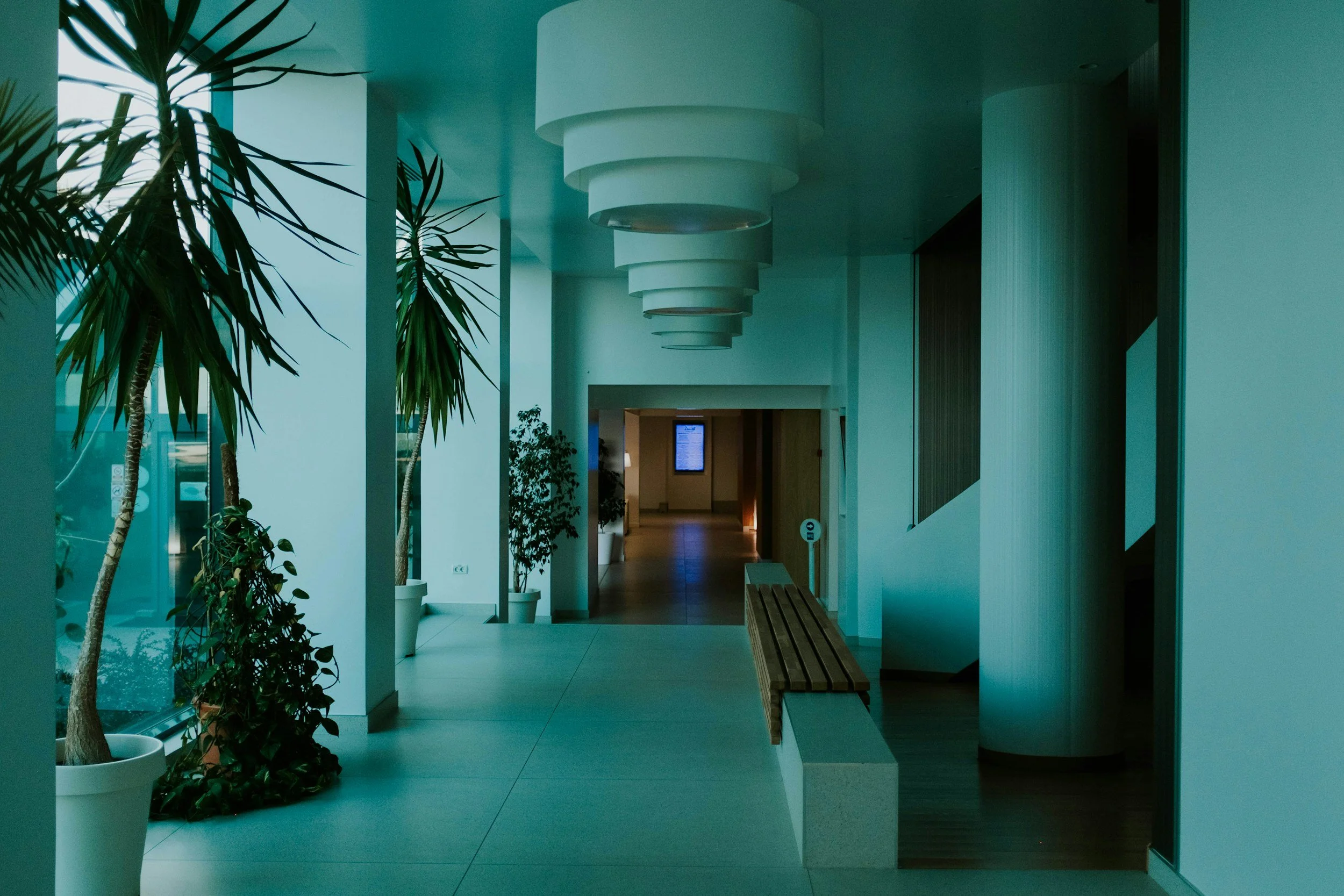
care & healing environments
Designing environments that support healing, clarity, and human dignity.
Healthcare and care environments operate under extraordinary human demand.
They must support decision-making under pressure, regulate emotional intensity, reduce cognitive load, and protect dignity — for patients, families, and staff alike.
Design Veritas works with healthcare leaders, architects, and care providers to ensure that care environments perform at the human level once occupied, not just in theory or compliance.
We focus on the Human Layer™ of care environments: how people move, wait, decide, recover, and cope — often during moments of vulnerability.
Why the human layer matters in healthcare
In healthcare and care settings, misalignment shows up quickly and painfully:
heightened stress and emotional escalation
confusion and decision fatigue
staff burnout and compassion depletion
environments that overwhelm rather than regulate
workarounds that erode safety and care quality
These are not clinical failures.
They are human system failures — and they are predictable.
How Design Veritas plugs in
Design Veritas works between programming, design intent, and care operations, translating human and operational realities into design-ready experience and performance criteria.
Our work helps teams:
anticipate real patient, family, and staff behavior
identify stress, overload, and breakdown points
design environments that support regulation and clarity
protect care quality through real-world use and pressure
We do not replace clinical expertise or operations.
We design the conditions that allow care to function humanely and effectively.
How the work is delivered
Healthcare and care work is delivered through the Design Veritas Human Layer system:
Alignment Blueprint™ — diagnosing how human conditions are likely to perform
Human Layer Reset™ — redesigning the conditions that matter most
Human Layer Continuity™ — protecting alignment as environments are used and evolve
This work is expressed through:
Environment & Experience Design (sensory, spatial, and experiential conditions)
Leadership & Human Systems (emotional climate, rhythms, and decision conditions)
Where this work applies
Design Veritas supports a range of care environments, including:
hospitals and medical centers
outpatient clinics and ambulatory care
behavioral health and mental health facilities
long-term care and senior living
healing, recovery, and wellness-focused environments
Across all contexts, the goal remains constant:
support human regulation, dignity, and clear care delivery.
What success looks like
When the human layer is designed:
environments feel calmer and more legible
stress and emotional escalation decrease
staff experience greater steadiness and capacity
patient experience improves without added burden
care quality is supported by the environment, not undermined by it
Healing is not forced.
It is supported by design.