
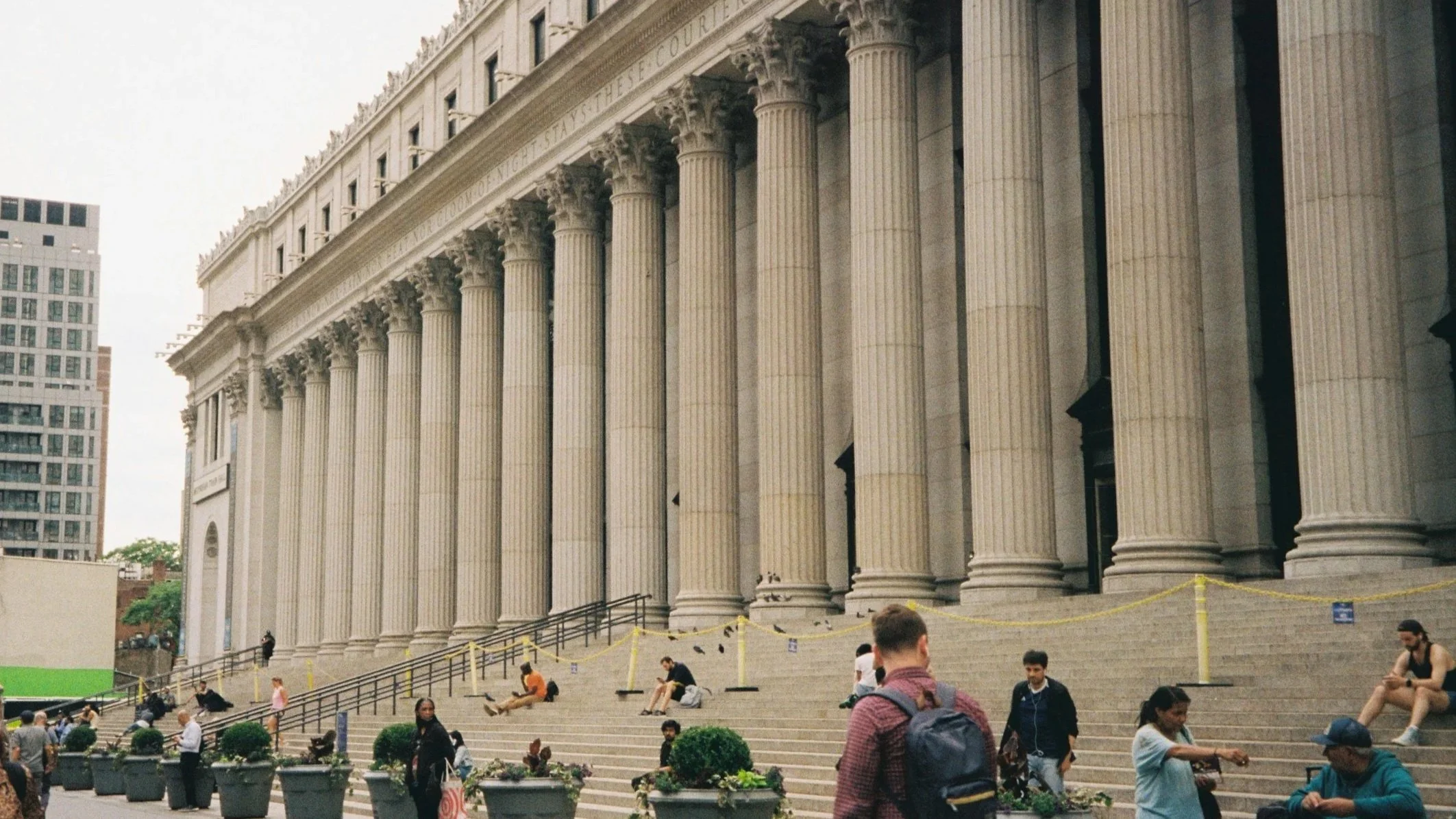
civic & institutional environments
Designing public environments that work under real human conditions.
Civic and institutional environments carry a unique responsibility.
They must function under pressure, serve diverse populations, and uphold dignity, trust, and clarity — often with limited margin for error.
Design Veritas works with civic and institutional leaders, architects, and project teams to ensure that public environments perform as intended once occupied, not just at substantial completion.
We focus on the Human Layer™ of civic environments: how people actually move, wait, decide, cope, and interact under real-world conditions.
Why the human layer matters in civic settings
In civic and institutional projects, breakdowns are rarely aesthetic.
They are human performance failures, such as:
confusion, stress, or wayfinding failure
overload in waiting or service areas
staff workarounds that undermine design intent
environments that escalate emotion rather than regulate it
reputational risk for institutions and design teams
These outcomes are predictable when human experience is assumed rather than designed.
How Design Veritas plugs in
Design Veritas works between programming, design intent, and operations, translating human and operational realities into design-ready criteria that guide decisions across the project lifecycle.
Our work may include:
validating assumptions about use, flow, and behavior
identifying friction, overload, and breakdown points
translating insight into experience and performance guidance
protecting intent through transition and early occupancy
We do not replace architects or operators.
We strengthen performance and reduce post-occupancy risk.
How the work is delivered
Civic and institutional work is delivered through the Design Veritas Human Layer system:
Alignment Blueprint™ — diagnosing how human conditions are likely to perform
Human Layer Reset™ — redesigning the conditions that matter most
Human Layer Continuity™ — protecting alignment as environments are occupied and evolve
This work is expressed through:
Environment & Experience Design (outer conditions)
Leadership & Human Systems (inner conditions that shape use and service)
Where this work applies
Design Veritas supports a wide range of civic and institutional environments, including:
government buildings and public facilities
courthouses, libraries, and cultural institutions
educational campuses and learning environments
transit-adjacent and high-traffic public spaces
Across all contexts, the goal remains the same:
clarity, dignity, and real-world performance.
What success looks like
When the human layer is designed:
public spaces become more legible and calming
service interactions stabilize
staff rely less on workarounds
complaints and rework decrease
design intent holds longer into operation
Performance becomes embedded — not enforced.